Greener Kirkcaldy Lockdown Compilation Song (Video)

Lockdown has been a difficult time for all of us. Here is how the Greener Kirkcaldy staff have been coping… We hope you enjoy!
|
info@greenerkirkcaldy.org.uk 8 East Fergus Place, Kirkcaldy, KY1 1XT 01592 858 458
Going Greener Together
By Steven

Lockdown has been a difficult time for all of us. Here is how the Greener Kirkcaldy staff have been coping… We hope you enjoy!
< Kirkcaldy After Lockdown – Event Report | Kirkcaldy Walking Festival: My Favourite Walk – Rabbit Braes & Raith Plantation >
By Craig Leitch

To celebrate the Kirkcaldy Walking Festival 2020, Christine May, Chair of Greener Kirkcaldy Board, shares her favourite walk with us. If you would like to share your experience of walking during the pandemic period, why not come along to our Strolling Through Lockdown event on Sunday 9th August at 7pm?
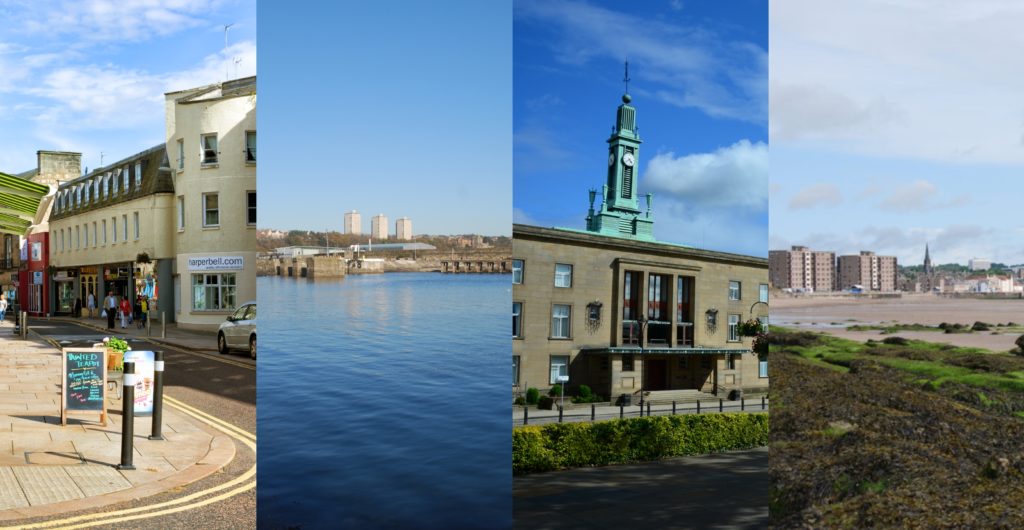
A year ago, I would have chosen Kirkcaldy Prom as my favourite walk. The changing patterns of light on water, the sense of space at low tide, looking up the pends and wynds to the High St recalling the great names who built both our town and places further afield, and the peace of the harbour are always a pleasure.
But as lockdown kept most of us closer to home for the last four months, I have watched as my local park at Rabbit Braes and Raith Plantation has marched through the seasons alongside my feet and the paws of the rescue greyhound. The whole circuit is between two and three miles, even at its longest, but what contrasts there are for all the senses. Starting each time at the point opposite Ben Alder Place on Bennochy Road, as the soggy end of March gave way to the prolonged dry spell of April and May, the daily permitted exercise saw the slow change of the seasons on the slope down to the valley floor at Linton Lane, the biting late March wind off the Forth tugging woolly hats and setting the early flowering plants dancing, later walks spent admiring the pink waves as the wind blew across the ripening velvet grass and helped lift the fledgling starlings as they practiced their first foraging flights.

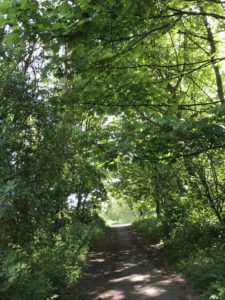
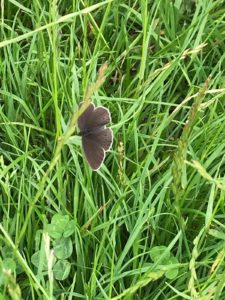
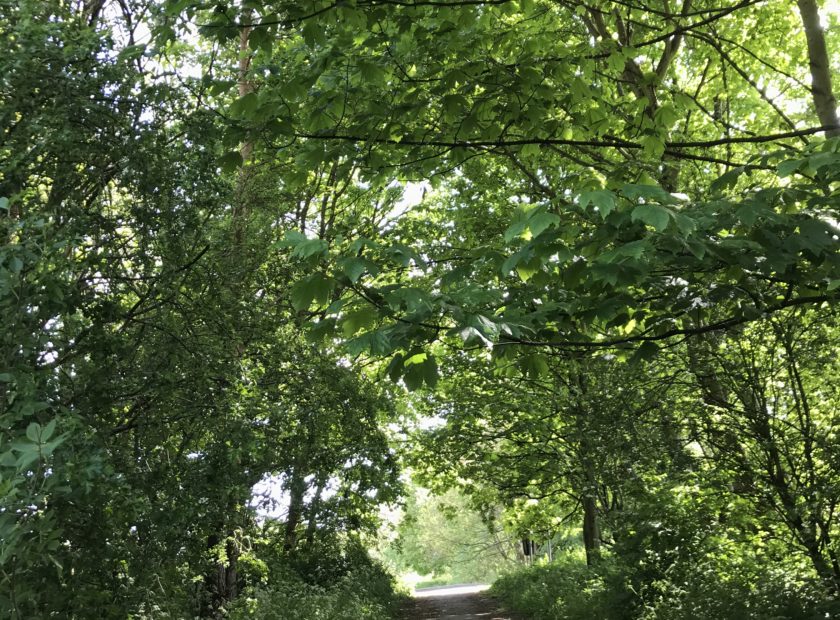
Tree canopy at Rabbit BraesAlong the valley floor it is always more sheltered, and the high trees are well favoured by chiffchaffs, greater spotted woodpeckers, crows and magpies. Wild garlic and buttercups, hawthorn and meadowsweet, rosebay willowherb and thistles all provide shelter and sustenance for bees, beetles, flies and a host of creatures that I have no names for. The gorse flowers were a haven for bees in April, as were the nettles when they flowered in pinks and whites. Lately, I have stopped and watched as mink coloured Ringlet butterflies flit amongst the grasses and tried but failed to capture a photo of the scarlet underwings of the day-flying Burnett moth.

Moving along the valley towards Broom Road, the shelter of the trees along the burn gives way to the open area where regular groups of dog walkers gather to have a socially distanced chat while their pets run round them. As lockdown has eased, families have come for picnics, and fearless youngsters have slid down the steep banks to the detriment of the seats of their pants.

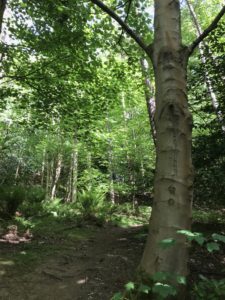
And then across Bennochy Road into Raith Plantation, with its choice of two paths. The upper route runs parallel to the houses on Bennochy, whilst the wider lower path follows the burn along Oriel Road. The trees here are huge, growing on the steep sided cliff and along either side of the bottom path. In March and April, the spring light through the bare trees allowed a huge profusion of flowering plants to provide early food for many creatures. As the greening of the canopy concealed the buzzards wheeling above, only their calls revealed their presence as they taught last year’s chicks to hunt with the woodpeckers drumming an accompaniment. The darker, cooler walks along the lower path on the very hot days in June were soothing as the second mile began. Until, of course, it was time for the lung-bursting scramble up the gulley to the top path to come out behind the houses on Sauchenbush Road.

By geraldine

During lockdown I have been making the most of being outdoors. In Kirkcaldy, we are really lucky to have some beautiful parks and coastal walks. I have also used this opportunity to find out more about, and explore Fife’s Core Paths. These paths are local paths and trails and cover the whole of Fife. Some of them are well known and others are not. I think a lot of them are old farm tracks between townlands and old roads people may have used in their local area. Sometimes it’s not so clear why they are there but I like to make up my own stories about those ones – where they come from and where are they going.
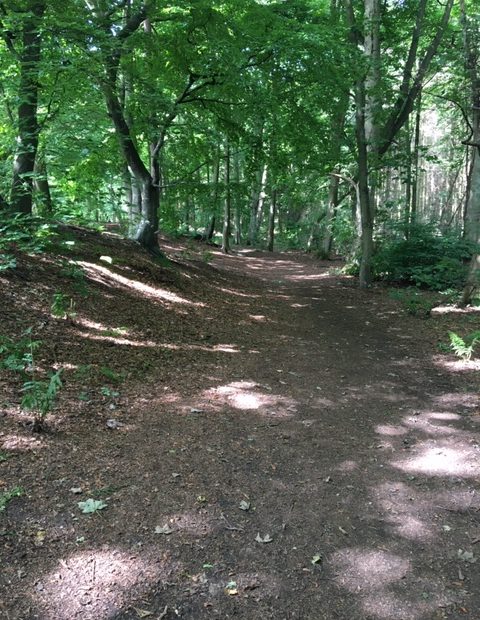
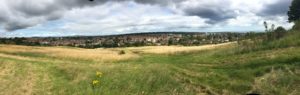
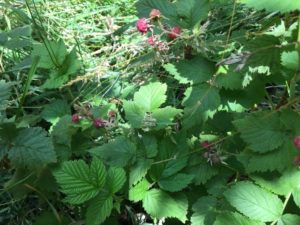
All the core paths in Fife are gathered together in one place online and are easy to navigate with a little patience. You can print the maps you want off too. Follow the links to find a path or a set of linking paths near you. As it’s the Kirkcaldy Walking Festival I tried a new one on Monday linking a few paths together. I used Map 53 to take me a on walk from Bennochy Road through Criagarter Plantation and Sunnybrae Plantation, to Oriel Road. It gave me the most glorious view of Kirkcaldy, The Lomonds, Largo Law up to the East Neuk, and across to Bass Rock, Berwick Law and East Lothian in one whole vista on the approach to Rabbt Braes. It was worth going up there for the view alone. I then walked through dappled shade in woods, and stopped to forage some wild raspberries while taking in the view up to Torbain Tower before heading back in towards Kirkcaldy. Here is the path I took:
Path 433: Starting on Bennochy Road where the old Maternity Hospital is, I headed up Bennochy Road. It’s worth taking a moment to pause at the renovations being made at the old hospital site. Some listed buildings in the complex are bring repointed and reroofed. It’s great to see old buildings being brought back to life. When you reach The CO-OP, turn tight and keep going. I paused on the way to Rabbit Braes to take in the whole view of Kirkcaldy

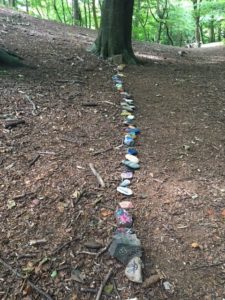
Keep following Bennochy Road around to Wester Bogie Road. Cross over towards Torbain Road. Before you get to the turn off for Torbain Road, you will see an old iron gate with a Fife Council Core Path marking pole (purple triangle). Go through the gate – you are now entering onto Path 826 at this point. Follow the obvious path through the woods. There is a lovely collection of painted stones forming in the woods.

Keep following the marked poles until the path starts to go downhill to join path 436. You will now be going downhill and through Craigarter Plantation towards Sunnybrae Plantation. I paused here and there to admire fields of corn through the trees and forage for wild raspberries.
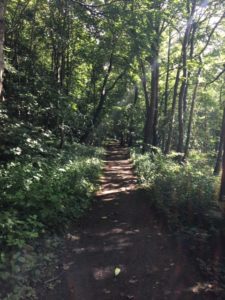
The only sounds I could hear were the wind rustling the leaves and birdsong. The path got a bit confusing as I came onto open ground- see image.

The path seemed to take me uphill or to the back of a house, but eventually I found the right path. On the path that seems to head towards the back garden of a house, there is a few trees on a very small rise or incline. If you look beyond the trees there is a path heading uphill. Take this path which will bring you around and down through woods at the back of house. This is path 436 continued. Keep going until you meet a tarmac road. Turn to your right and following the road until you a see sign pointing to a private road (Raith House). Opposite this road there are clear marked poles leading back onto path 436. From here, this path will bring you all the way back to Oriel Road through Sunnybrae Plantation. You’ll pass lots of homemade dens that people seem to have enjoyed playing with.
All in all this walk took me 2 hours door to door with breaks for snacks and snacking on wild raspberries. It took me from the centre of Kirkcaldy through woods and cornfields, back into the urban hub of Kirkcaldy. If you wanted to make it a more circular path you could cross over Oriel Road and join path 435 on the opposite side taking you through Long Braes plantation back up to Rabbit Braes. I am going to save that one for another time!
Walking the core paths takes a little bit of planning but is well worth it. Always check the paths online and follow the links. Some paths may have temporary diversions or could have become grown over. Enjoy!
< Kirkcaldy Walking Festival: My Favourite Walk – Rabbit Braes & Raith Plantation | Kirkcaldy After Lockdown – Community Survey Results >By Lauren Brook

At our Kirkcaldy After Lockdown event in July, we started a conversation with around 60 people asking what post-lockdown Kirkcaldy should look like, and how Greener Kirkcaldy should get involved (read the results of this conversation here).
We followed this event with a community survey to gather your thoughts and ideas. We asked you:
150 people responded to our survey with lots of positivity, passion and ideas – showing there’s a lot of love for Kirkcaldy and a desire to work together to make it better. Thanks to everyone who took part, we’re using your feedback and ideas to update our Strategic Plan for the next few years. We’ll publish this over the summer. Here’s a summary of what you told us.
Community Interests
As a community:
What do you love about Kirkcaldy (now)?

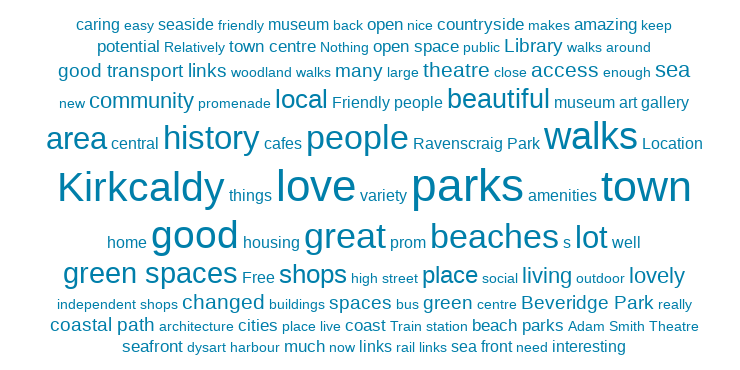
You told us the things you love about Kirkcaldy are… the green spaces, parks, beaches, and the seafront… the friendly people, the community spirit, community projects and support… the history and heritage… the transport links, the culture, the businesses, the amenities, the location… the creativity, the innovation… and the potential.
What should our future ambitions for Kirkcaldy be?

You gave us lots of inspiring visions for what Kirkcaldy could be like, but the main themes that arose were:
What changes need to happen in Kirkcaldy for these ambitions to happen?
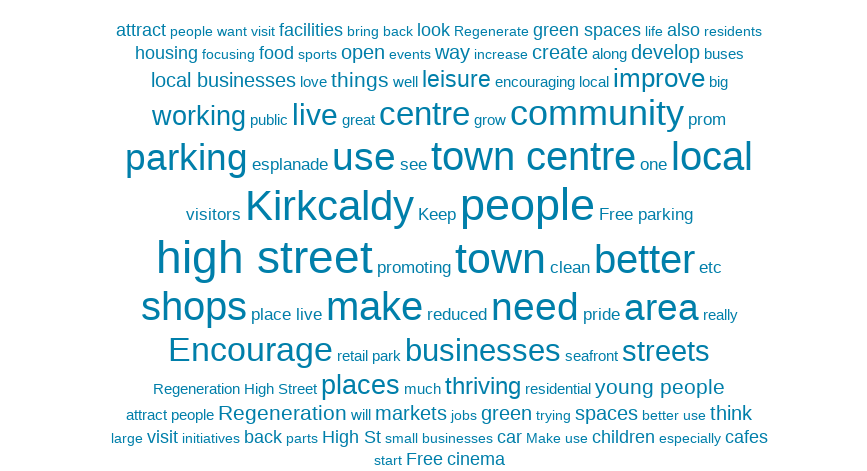
You also had lots of ideas for specific projects to regenerate the town – from creating artist hubs in empty properties, community gardens in the town centre and renovating town centre units into residential properties, to community energy projects, more pedestrianised areas and on-street bike share schemes. We’ll consider all of these ideas. Here are the main changes you think need to happen:

What part should Greener Kirkcaldy play?
Next Steps
Thanks to everyone who took part in our survey and our online public meeting. We’ll combine everything you told us and use it to update our strategic plan for the next few years.
We’re also going to be working very closely with the new Love Oor Lang Toun group and we’ll pass all of your idea and feedback on to them.

We’ll hold a follow-up event to continue this civic conversation in the autumn. Watch this space.
< Kirkcaldy Walking Festival: Finding your path | Summer in the garden with Cap and Kay >By geraldine

THE WALLED GARDEN is there for the future, but in the meantime our
own garden just blooms and blooms, sometimes with unwanted guests
but mainly with just what’s there and what we have put in.
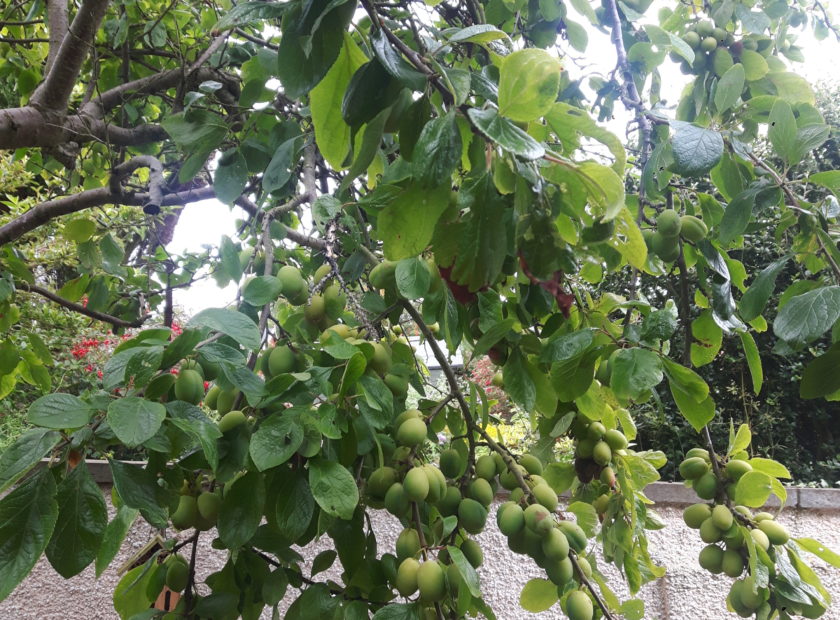
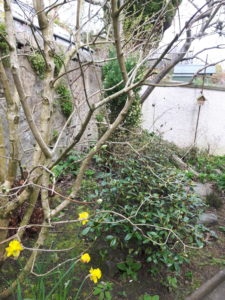
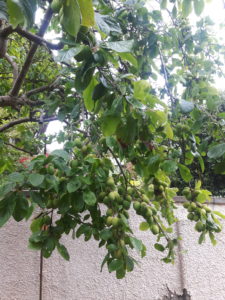
The plum tree is heavily laden with ripening fruit after a thin season
last year. Even now it looks delicious
I am reliably informed that many goodies can be made including jam,
chutney, pie filling and, yum, yum, a pudding with ice cream. Unwisely
I ask which goodies will we be getting and back comes the prompt reply,
“wait and see.” So there.
What a difference a day (and a few more) makes: the plum tree on 1st April
Top of the list for unwanted guests must be the sycamore which is a
fine tree when it stands alone. But marching like a legion across the garden it tests my love of trees to the limit.
I give them the order of the chop. Unfortunately the leaves of the
sycamore at crowded ground level are not unlike those of the Japanese anemone. Oh dear, oh dear, what a row. . .
Other very welcome guests are this Summer’s butterflies and it was time
to do Butterfly Conservation’s garden butterfly count. They must, I thought, come in droves (what is the group name for butterflies?) to the blooming buddleia.
But the wind on most days proved too much for their fragile flying and
nothing appeared in the 15 minute time frames for counting. But there
were the occasional visitors: Small and Large Whites, Green-veined
Whites, Small Tortoiseshells and Red Admirals. I hope they keep coming.
Creatures of the night also paid their visits. They brought their sinister
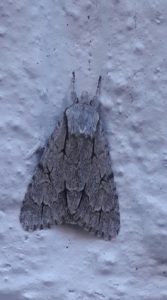
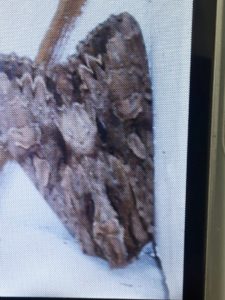
names with them: a Dark Arches on the inside of my tool shed door and a Grey Dagger on the white wall of the house. Both perfectly formed beauties.

Look behind you: the Dark Arches moth


Mack the Knife: the Grey Dagger Moth
Summer slowly changes to another season and the Swifts, a true African bird, fatten up in the skys over Dysart Road for their long, homeward flight while two raggedy crows sit quietly on my neighbour’s roof suffering their seasonal moult.
Now where are my plum goodies . . . Dropping day is near: the plum tree on 31st July
< Kirkcaldy After Lockdown – Community Survey Results | Getting Started with an Allotment >
By Steven

As #NationalAllotmentWeek starts our Marketing and Communications Assistant Steven details how you can get started with an allotment in this latest blog.
Starting your own allotment can be daunting and you might think that you wouldn’t have the first clue where to begin. In this blog, I will give you some tips on how you might get started to try and make your first journey into getting an allotment a little easier.
Trying to find a space for your allotment can be frustrating. Usually, you would need to join a waiting list and could be a while before you are able to get one. You can find alternate space, however.
My Dad got lucky when he was looking for space, the local farmer had a space close to his mother’s house and allowed him to use the space for his allotment. If you know someone in your local area that might be able to help in this way, then it might be worth asking.
If that doesn’t work out for you then you can find a space in your garden if it is big enough.
When you are looking for space always try to look for something that fits your needs. If you starting out for the first time it might be a good idea to start off small and then working your way up to a bigger plot.
This doesn’t sound like the most exciting of jobs and you would probably be right in that assumption but it is a necessary task. You will need to set some time aside to maintain the weeding in your allotment throughout the year but if you get a piece of land that needs it before you plant anything then you will make life a lot easier for yourself in the long run if you make a big effort to get it done early.
If you have an area where there is always weeds growing, then a good idea would be to plant your potatoes or courgettes as they smother weeds.
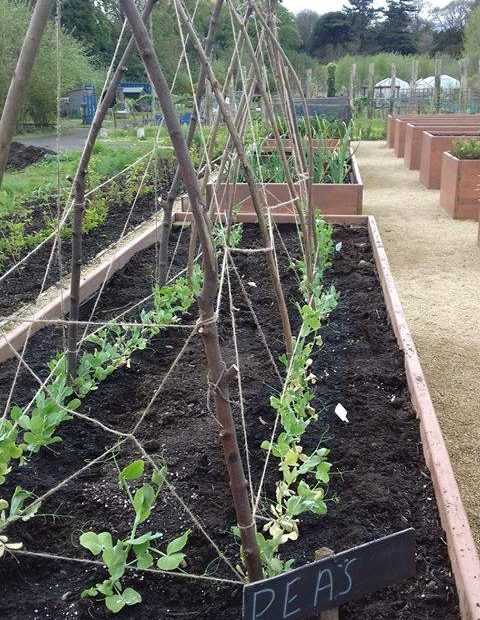
Try to keep your peas, carrots and onions away from weeds as they cast little shade and weeds can smother them.
If you are just getting your allotment ready now, then it is probably worth waiting until next Spring to start planting. In the meantime, you can look after your soil so it is in the best condition it can be come next year.
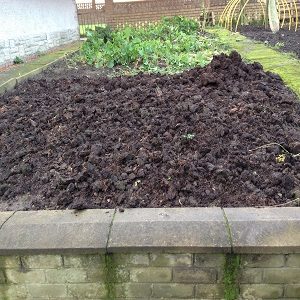
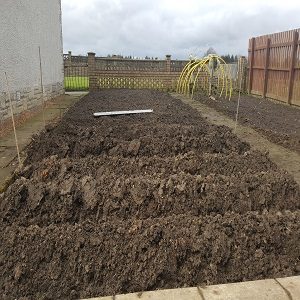
Over the autumn and winter months turn over the soil and put horse manure (if you can get it) over the soil so that it is ready for planting in the Spring. A couple of images below illustrate this. The best time to do this is when it is dry. If you try when the soil is wet, it could destroy the soil structure.

Another tip to keep your soil in good condition is not to step all over it. If you can, it is good to create some sort of a path so you can access all the areas you need to.
You can find out more about getting to know your soil in this blog.
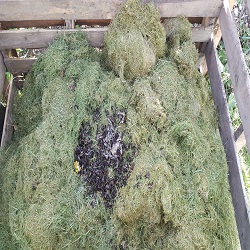
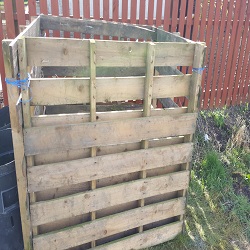
This is a good time to start collecting for your compost heap. In the Autumn your garden might be full of leaves that have fallen off the nearby trees, so it is a good idea to rake the leaves up from your lawn and other areas and then compost them. If you feel you don’t have enough leaves for compost, then try asking your neighbours to see if you can use their leaves. Also, make sure you have a cover to put over your compost heap.

Make sure you have the correct equipment for whatever job you are planning on doing in your allotment. If you are inheriting equipment, make sure to look over it and decide whether it needs any running repairs.
Also, try to have somewhere dry like a small shed to store your equipment when they are not getting used.
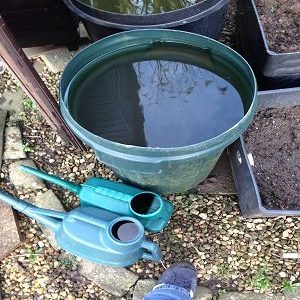
A good idea over the winter months is to start gathering a water supply for when the spring and summer arrive. We do live in Scotland so the chances of rainfall at this time of the year will be high and leaving buckets out to collect the rainfall could prove valuable over the summer where there may be a little less rainfall.

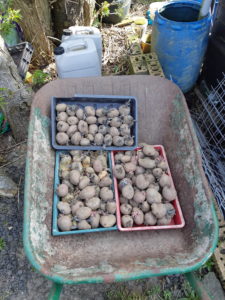
You can grow what you want but try to keep it simple if you are trying this for the first time. Over the years my Dad grew –

Try to keep your Potatoes away from your vegetables and if you have two places to grow like in the photo below then each year rotate where you grow each item.

Use this time to figure out what is best for you and start planning for next year and by the time Spring comes around you will be fully prepared to get stuck in.
< Summer in the garden with Cap and Kay | Strolling Through Lockdown (Video) >In the last year we have supported over 100 volunteers to gain skills, receive training, improve their employability and have fun.
Support us and help shape the work we do by becoming a member. Our members play a key role in setting our priorities, through consultations or by joining our committee.
Get updates on our news and events straight to your inbox. View our privacy notice
"*" indicates required fields