When Ramadan and Lent overlap: A shared moment for food, reflection and climate action
This year, Ramadan and Lent begin together on Wednesday 18th February. This offers a rare and meaningful moment of overlap between two faith traditions, and a wider invitation to reflect on how our everyday choices affect people and planet.
Both Ramadan and Lent are rooted in reflection, restraint, generosity and care for others. Food sits at the heart of both traditions: what we eat, what we give up, and how mindful we are of excess and waste.
At a time when climate change, food insecurity and the cost of living are so closely linked, this shared moment offers space to pause and think about food not just as nourishment, but as something deeply connected to values, resources and responsibility.
Shared values, different traditions
For Muslims, Ramadan is marked by fasting during daylight hours. It is a time of gratitude, humility and charity. Going without food and drink during the day sharpens awareness of need and encourages care for others, particularly those who experience food insecurity every day.
For Christians, Lent is a season of reflection and renewal. It traditionally involves fasting, prayer and giving. It is also a time of letting go, of excess, habits and behaviours that no longer serve, and creating space for change.
The practices are different. But the values are strikingly similar.
Both traditions emphasise care, empathy, self-control and responsibility, values that matter deeply to us at Greener Kirkcaldy and through Climate Action Fife.
A space for those of us with no religious faith
Many people do not follow a religion. But the idea of setting aside time to reflect on habits and choices is not a religious one.
Periods like Ramadan and Lent can also be seen as structured pauses. They offer a clear time frame to slow down, pay attention and try doing things differently.
For those of us who are not religious, this season can still be meaningful. It can be a chance to reflect on consumption, excess and impact, and to think about what we might give up, not out of obligation, but out of care.
At Greener Kirkcaldy, our Communications Assistant Chloe will be observing Ramadan this year. Although she is not Muslim, she plans to take the time to pause and reflect while learning about a religion and culture that many people in Fife follow. Communications and Events Coordinator Andrea also plans to give up coffee for the duration of Lent.
Food, waste and climate
Food connects values and climate in very practical ways.
Periods of restraint can change how we think about food. They remind us that food is precious, that it takes time, energy and resources to produce, and that wasting it has real consequences.
Food waste is also a climate issue. When food is thrown away, all the carbon used to grow, transport and cook it is wasted too. Reducing food waste is one of the simplest ways households can cut their carbon footprint while also saving money.
An invitation for everyone
This shared moment is an invitation for all of us, whatever our beliefs, to reflect on food and climate:
-
What food do we buy, and why?
-
How much do we prepare and consume?
-
How much do we waste, and what is the carbon cost of that waste?
Giving something up doesn’t have to mean going without nourishment. It could mean:
-
Planning meals more carefully
-
Cooking with what we already have
-
Using leftovers well
-
Choosing lower-carbon foods more often
-
Reducing food waste at home
Small daily actions really matter.
Taking part locally
If you’re looking for ways to take part locally:
-
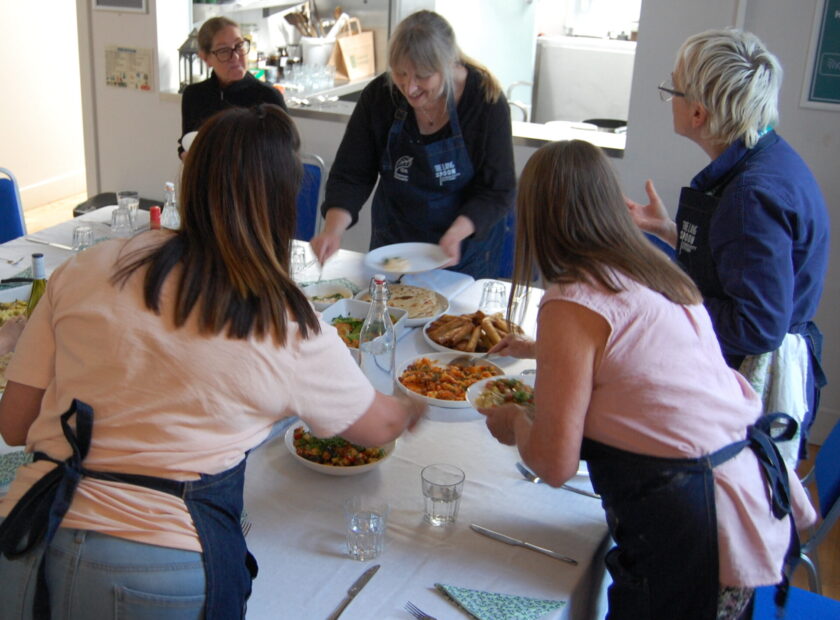
Join one of our community meals or cooking sessions, where food is shared, not wasted
-
Try a food-waste challenge at home, inspired by Love Food Hate Waste
-
Follow Greener Kirkcaldy and Climate Action Fife for practical tips, recipes and ideas to cut food waste and lower your carbon footprint
At Greener Kirkcaldy, our community food work is rooted in the belief that climate action starts in everyday places, kitchens, shops and shared meals. This season reminds us that mindful choices, repeated day by day, can reduce waste, cut carbon and strengthen care for our communities.
Sally Findlay,
Community Food Team Manager
|